
Why Did G‑d Create the World?
This essay explores why G-d created the world and why human beings were created in His image, bringing classical Jewish explanations into conversation with the
This essay explores why G-d created the world and why human beings were created in His image, bringing classical Jewish explanations into conversation with the

Summary This essay examines two consecutive narratives from Parshat Vayeira, each featuring a well and each posing a distinct epistemological challenge. Hagar’s well (Genesis 21:19)
By Alexander Poltorak Introduction In the first installment of this essay, “Collapsing the Wave Function of Urim and Thummim,”[1] we discussed the inherent duality of
By Alexander Poltorak Introduction The relationship between the laws of physics and the conditions necessary for life is among the most profound mysteries in both
By Alexander Poltorak The Tree of Life and the Tree of Knowledge as Metaphors for the Wave Function and Measurement Summary This essay proposes a
By Alexander Poltorak I. Introduction The confrontation between Jacob and an unidentified being in Genesis raises fundamental questions about the nature of consciousness, identity, and
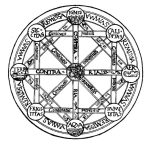
The parallels we have uncovered between the four elements, the letters of the Tetragrammaton, and the worlds of Seder Hishtalshelut suggest that the ancient sages
And G-d said to Abram, “Go forth from your native land and from your father’s house to the land that I will show you.” (Genesis
Abstract This essay explores the profound significance of the letter Bet (ב), the first letter of the Torah, and its numerical value of two as
Abstract This essay explores the profound connections between language, philosophy, physics, and spirituality in the context of Rosh HaShanah. By examining the linguistic roots of

The current Torah portion Beshalach tells about the splitting of the Sea of Reeds. As I discussed in my essay, “Collapse and Revelation,” the splitting

The story of Joseph and his brothers, described in the Torah portion of Vayeshev, presents many problems. Classical biblical commentators interpret the conflict between Joseph
I agree, all its elegance notwithstanding, the principle of least action does not prove the existence of an intelligent Creator. In a sense, when it
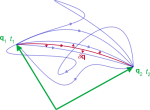
The spectacle of the universe becomes so much the grander, so much more beautiful, the worthier of its Author, when one knows that a small
The spectacle of the universe becomes so much the grander, so much more beautiful, the worthier of its Author, when one knows that a small
The least action principle is an expression of teleological reasoning where the initial states of the system are determined by the endpoints—the beginning and the

Cartesian dualism, or mind-body dualism, formulated by the French scientist, mathematician, and philosopher René Descartes (1596–1650), holds that the body and the mind (which he


