
Chayei Sarah and the Physics of Makifim and Pnimim
Synopsis
This essay reveals a profound numerical convergence between Torah and quantum physics through the number 137. In Genesis, Ishmael dies at precisely 137 years, while in physics, 137 is the integer approximation of the reciprocal of the fine-structure constant (α)—the fundamental constant that determines how strongly light couples to matter. Drawing on Kabbalistic concepts of Or Makif (transcendent, encompassing light) and Or Pnimi (immanent, internalized light), the essay proposes that α ≈ 1/137 represents the fraction of divine emanation that creation can absorb—approximately 0.73%—while over 99% remains transcendent. This structural principle manifests narratively in Chayei Sarah: Ishmael’s 137 years mark the completion of the expansive, Makif-like lineage, allowing the covenant to pass fully to Isaac’s inward, Pnimi-oriented line. The convergence suggests that both physics and Torah encode the same fundamental truth about reality’s architecture: vessels can only internalize a minute fraction of the infinite light that surrounds them.
Introduction
The portion of Ḥayei Sarah closes the life of Abraham’s first son, Ishmael, with a cryptic numerical signature:
And these were the years of the life of Ishmael: one hundred and thirty-seven years. (Genesis 25:17)
Years ago, I noted the uncanny resonance between 137 here and the appearance of 137 in physics as the integer approximation of the reciprocal of the fine-structure constant,[1] α—one of nature’s most enigmatic numbers.[2] In quantum electrodynamics, α determines the strength with which light couples to matter. Richard Feynman wrote:
It’s one of the greatest damn mysteries of physics: a magic number that comes to us with no understanding by humans. You might say the “hand of God” wrote that number, and “we don’t know how He pushed His pencil.”[3]
The value 137, which is usually represented as the approximation of the value (~137.035999166) obtained experimentally, has a greater significance than mere approximation. In quantum electrodynamics, the value of the fine structure constant varies slightly with energy due to vacuum polarization, and 137 emerges as the asymptotic value of α in the ultraviolet limit.[4]
Fine structure constant, simply speaking, is the ratio of two energies.[5] In mystical thought, this makes α a surprising conceptual analogue to a ratio of the most fundamental modes of the divine energy in Kabbalah: between ʾOr Makif (“encompassing” light, transcendent emanation) and ʾOr Pnimi (penetrating or “inner” light, immanent emanation).
What follows expands that original observation into a deeper metaphor:

That is, α expresses the proportion of the divine light (of a specific level) that becomes internalized through vessels (Pnimi) versus the light (of this level) that remains beyond their grasp (Makif).[6] This relationship opens an elegant doorway between physics and Kabbalah—between the structure of the electromagnetic field and the architecture of spiritual light.
This relationship opens an elegant bridge between physics and Kabbalah: the fraction of electromagnetic light that matter can internalize mirrors the fraction of divine light that vessels can receive.
1. The Physics: α as Coupling Strength
The fine-structure constant is defined by
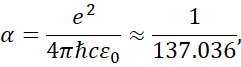
where e is the elementary charge (electron’s charge), ħ is the reduced Planck’s constant, c is the velocity of light in the vacuum, and ε0 is the electrical permeability of space.[7]
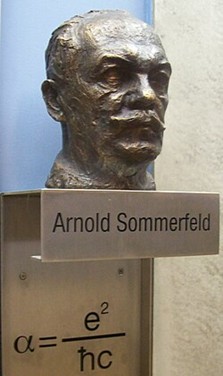
It is dimensionless—independent of units or scales—suggesting that it reflects something intrinsic to the architecture of reality. It quantifies the probability that a charged particle (such as an electron) will interact with a photon.
As standard physics texts note, the numerical value[8] of α is anthropically fine-tuned: even modest deviations would prevent stable atoms from forming.[9] Stable matter, and therefore life and intelligent beings, could not exist if its value were very different.[10],[11]
We live in a universe exquisitely tuned by α: a universe where light and matter interact—but only weakly, delicately, sparingly. One might say that only ~1/137 of the available electromagnetic interaction strength becomes internalized in photon–electron coupling.[12]
2. The Kabbalah: Makif and Pnimi
In Jewish mysticism, light, (in Hebrew, ʾOr or Ohr) is used as a metaphor for the divine emanation. The emanation of Ein Sof (Infinite One, a kabbalistic monicker for G‑d) is called ʾOr Ein Sof (the Light of the Infinite). This Infinite Light, grants life to the worlds at two levels, ʾOr Makif and ʾOr Pnimi.
Thus, according to classical Kabbalah and Ḥassidut, the Infinite Ligh, ʾOr Ein Sof, manifests and gives life to creations through two modalities:
- ʾOr Makif or sovev kol almin (“Encompassing Light”) —transcendental emanation, unbounded, transcendent, not internalized light that hovers around a vessel but does not enter it.
ʾOr makif represent hidden (not revealed) light with infinite potential that is in excess of what the world can hold. It is equally present in all elements of creation regardless of the capacity of the creation to absorb, appreciate, understand, or benefit from this light. - ʾOr Pnimi or memaleh kol almin (“Inner” or “Penetrating Light”) —immanent emanation that is bounded, internalized, adapted to the capacities of the vessel that represents the revealed divine light that can be absorbed by the world.
For a more detailed explanation, see my essay, “The Surrounding Light and the Penetrating Light.”[13]
The relationship between Makif and Pnimi amounts to the relationship between the divine light that transcends the vessel’s capacity (and therefore cannot enter it) and the divine light that the vessel can internalize according to its measure. Creation absorbs only a tiny fraction of what emanates from the Infinite.
This structure is not metaphorical; it is foundational to the Lurianic Kabbalah and the Chasidic philosophy of Chabad.
3. α as the Ratio of Inner to Surrounding Light
Here is the surprising conceptual bridge:
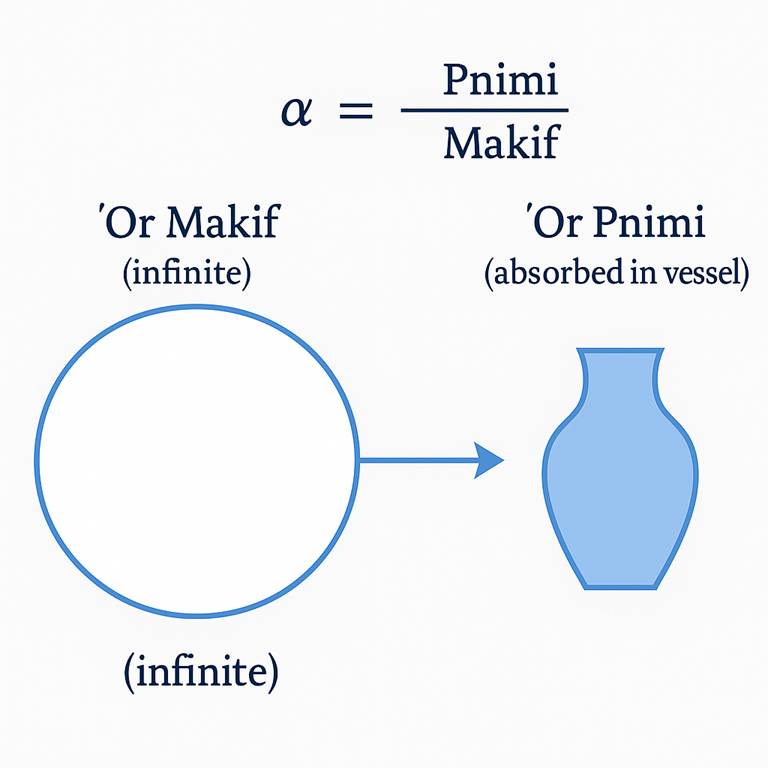
In Quantum Electrodynamics (QED), ʾOr Makif corresponds to the unbounded electromagnetic field, the infinite sea of photon modes. On the other hand, ʾOr Pnimi corresponds to actual photon–electron interactions—the light that matter can absorb.
Because α ≈ 1/137, only roughly one part in 137 of the electromagnetic “light” becomes internalized, approximately 0.73% of the field’s potential couples to matter. Over 99% of electromagnetic waves (light) remain transcendent—Makif.
This means most of the divine emanation is in the mode of Makif that transcends the created universe. Creation absorbs only a whisper of the surrounding light. This is the physics embodiment of the great Kabbalistic principle:
“The vessels cannot receive the infinite light except in a highly contracted form.”[14]
Read: a highly contracted form and amount—the light is diminished both qualitatively and quantitatively (as far as its ability to be absorbed by the vessels).
4. Ishmael’s 137 Years — The End of the Makif Line
This reading casts Ishmael’s lifespan—137—as a structural marker.
We may cautiously suggest, at the level of thematic resonance rather than classical attribution, that Ishmael’s expansive radiance parallels Makif-like qualities,[15] whereas Isaac’s inwardness and well-digging evoke Pnimi-like[16] qualities. Although, Rabbi Ḥayyim Vital seems to suggest that in the name of his teacher, the holy Ari, more explicitly in Pri Etz Ḥayyim.[17]
By contrast, Isaac represents the Pnimi branch—not power, but inwardness; not empire, but continuity; not radiance, but depth—Isaac digs wells.[18]
In Chayei Sarah, the makif branch of Abraham’s progeny reaches its completion with Ishmael’s 137 years.
The covenant now passes entirely into the pnimi line—into Isaac, whose inward, vessel-oriented nature can internalize and transmit the Abrahamic mission.
The makif energy does not become pnimi in the days of Abraham and Isaac. Rather, the structure of creation remains: a small measure of light becomes internalized (Pnimi), while the greater measure remains beyond vessels (Makif).[19]
This is the structure encoded by the fine-structure constant α ≈ 1/137: the proportion of light any vessel can absorb versus the vastly greater light that surrounds it.
The next chapter—literally—begins the Pnimi line: the family of Isaac, the genealogy of Jacob, the formation of Israel.
Here, physics and Torah converge beautifully: at Ishmael’s 137 years, an expansive, outward-radiating line concludes, and the inward, vessel-structured line continues through Isaac. The structure of creation remains unchanged—Pnimi internalizes a small portion of the light available, while Makif exceeds the vessel’s capacity.
5. A Unified Interpretation
Seen through this dual lens—physics and Kabbalah—the significance of 137 sharpens:
- In physics, α ≈ 1/137 expresses the fraction of infinite electromagnetic light that becomes internalized by matter.
- In Kabbalah, 137 marks the transition from surrounding lights (Ishmael) to inner lights (Isaac).
- In Chayei Sarah, 137 seals the outer line so the inner line can emerge.
Light becomes lineage.
Potential becomes covenant.
Conclusion
The appearance of 137 at this pivotal juncture in Genesis is no mere coincidence—it is a numerical seal marking a fundamental transition in how divine light flows through human history. Just as the fine-structure constant reveals that matter can absorb only a whisper of the electromagnetic field’s infinite potential, so too does Ishmael’s lifespan of 137 years reveal that the expansive, unmeasured energy of the Makif must yield to the concentrated, vessel-building work of the Pnimi.
This is not a story of rejection but of structural necessity. The universe requires both modalities: the vast surrounding light that maintains infinite potential, and the carefully measured inner light that builds worlds from within. Ishmael’s descendants would indeed become “a great nation,” fulfilling the Makif‘s promise of expansion and influence. But the particular covenant—the mission of bringing divine consciousness into the material world through law, ethics, and sanctified daily life—required Isaac’s inward orientation, his patient well-digging, his capacity to transform potential into actualized holiness.
On this reading, physics becomes commentary on the Torah, and Torah illuminates physics. The same Hand that wrote α ≈ 1/137 into the quantum structure of reality also wrote 137 years as Ishmael’s final signature. Both inscriptions teach us that creation’s deepest secret lies not in grasping at the infinite, but in recognizing how much must remain beyond our grasp—and finding holiness in the fraction we can hold—all the while refining vessels so that they can ultimately receive infinite light.
[1] Also known as the Sommerfeld constant, after physicist Arnold Sommerfeld, who introduced it in 1916.
[2] Poltorak, Alexander. “Chayei Sarah: Where Kabbalah Meets Physics.” The Times of Israel, November 22, 2018.
[3] Feynman, R. P. (1985). QED: The Strange Theory of Light and Matter. Princeton University Press. p. 129.
[4] “For historical reasons, α is known as the fine structure constant. Unfortunately, this name conveys a false impression. We have seen that the charge of an electron is not strictly constant but varies with distance because of quantum effects; hence α must be regarded as a variable, too. The value 1/137 is the asymptotic value of α.” Halzen, F.; Martin, A.D. (1984). Quarks and Leptons: An introductory course in modern particle physics. John Wiley & Sons. p. 13; see also David J. Griffiths, Introduction to Electrodynamics, 4th ed., Pearson, 2012; Peskin & Schroeder, An Introduction to Quantum Field Theory, Westview Press, 1995.
[5] Fine structure constant is the ratio of two energies: the energy needed to overcome the electrostatic repulsion between two electrons at a distance d from each other, and the energy of a single photon of wavelength λ = 2πd. α2 is also the ratio of the potential energy of the electron in the first circular orbit of the Bohr model of the atom and the energy mec2 equivalent to the mass of an electron.
[6] As discussed in the endnote 5 above, the fine structure constant α is the ratio of two energies. In this context, α can be seen as an analog to the ratio of two modes of divine energy, ʾOr Makif and Or Pnimi. In quantum field theory, interactions between particles or between a particle and a field is called “coupling.” α is a coupling constant that determines the strength of interaction between an electron and the electromagnetic field (light). Similarly, we can speak of the interaction between the divine light (ʾor or ohr) and vessels (kelim). In this context, α can be seen as an analog to the ratio of the strength of “coupling” between two modes of the divine light, ʾOr Makif and Or Pnimi to created vessels (kelim).
[7] In the electrostatic CGS system units that sets , the expression of the fine-structure constant becomes α = e2/ħc.
[8] The best known value of the inverse fine structure constant is 1/ α = 137.035999166(15).
[9] Susskind, L., The Cosmic Landscape, ch. 4.
[10] The α needs to be between around 1/180 and 1/85 to have proton decay slow enough for life to be possible.
[11] Max Born wrote, “If alpha were bigger than it really is, we should not be able to distinguish matter from ether [the vacuum, nothingness], and our task to disentangle the natural laws would be hopelessly difficult. The fact, however, that alpha has just its value 1/137 is certainly no chance but itself a law of nature. It is clear that the explanation of this number must be the central problem of natural philosophy.” Miller, A. I. (2009). Deciphering the Cosmic Number: The Strange Friendship of Wolfgang Pauli and Carl Jung. W. W. Norton & Co. p. 253
[12] Feynman, R. P., QED.
[13] Poltorak, Alexander. “The Surrounding Light and the Penetrating Light,” The Times of Israel, Mar 24, 2020 (https://blogs.timesofisrael.com/the-surrounding-light-and-the-penetrating-light/)
[14] Etz Ḥayyim, Shaar HaHakdamot.
[15] cf. Tanya, Iggeret HaKodesh 2.
[16] cf. Likutei Torah, Vayikra 2a.
[17] We can infer this from the following statement in Pri Etz Chaim, “But from the walls [of the sukkah] — that is, Zeir Anpin and Nukva — from the ends of their extremities, Ishmael and Esau nurse.” Pri Etz Chaim, Sha’ar Chag HaSukkot, ch. 3
[18] Genesis 26:18, 19, 21, 22, 25.
[19] According to Ḥassidut, only in the Messianic future will vessels be refined enough to internalize transcendent light (Ohr Makif).


Not to mention the gematria of the word ‘kabbalah’ is 137. ;)
Yes, of course. This was the topic of my earlier essay referenced here. See https://quantumtorah.com/chayei-sarah-where-kabbalah-meets-physics/