1. What Remains When the Light Withdraws?
In my previous essay, “Darkness on the Face of the Deep,” I explored the possibility that the primordial darkness described in Genesis might be understood as a metaphor for a horizon—a boundary of concealment rather than a mere absence of light. The question that interested me was how darkness could be something created, with a place and a boundary of its own.
But while reflecting on the Lurianic account of creation, another question occurred to me. After the infinite light withdraws in the primordial tzimtzum, what remains in the vacated space (chalal makom panui)? And how does that remnant participate in the creation of the world?
The Kabbalists call it reshimu—a trace, an imprint, an impression, or a residue of the original infinite light.
Moreover, at first glance, this seems paradoxical. If the purpose of tzimtzum was to withdraw the infinite light so that finite existence could become possible, why would any trace of that light remain? Would that not defeat the very purpose of the contraction?
Even more puzzling is what happens next. A narrow ray of Divine light, called the kav (“ray” or “line”), enters the chalal (vacated space) and, through its interaction with the reshimu, creates the kelim—the vessels that give structure and definition to the emerging worlds.
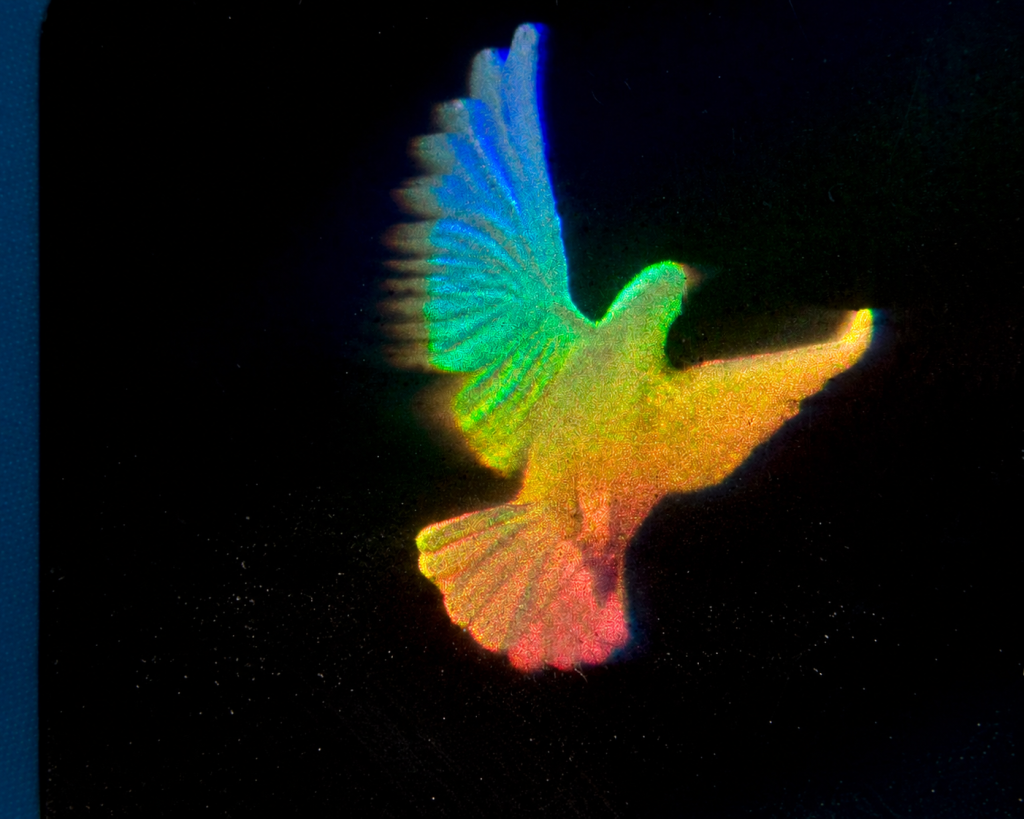
As a physicist, I find this interaction particularly intriguing. It reminds me of an optical phenomenon discovered in the twentieth century: holography.
A hologram contains an imprint of light that, when illuminated by an appropriate beam, reconstructs a three-dimensional optical image. Could this provide a modern scientific metaphor for the interaction of the reshimu and the kav?
I believe it can. And the connection becomes more interesting still when we move from optical holography to the holographic principle in quantum gravity, which suggests that the structure of a spatial region can be described by information associated with a lower-dimensional boundary.
To appreciate the parallel, we must first understand what the Kabbalists actually taught.
2. The Void That Was Not Empty
The doctrine of tzimtzum, associated with Rabbi Isaac Luria (the Arizal, 1534–1572), begins with an extraordinary proposition.
Before creation, the infinite Divine light—Ohr Ein Sof—filled all existence. There was no room for a finite world, because the unbounded revelation of Divine infinity left no possibility for anything to appear as a separate, independently existing entity.
When it arose in the Divine will to create worlds, the infinite light underwent tzimtzum, a withdrawal or concealment, leaving a vacated space known as the chalal makom panui.
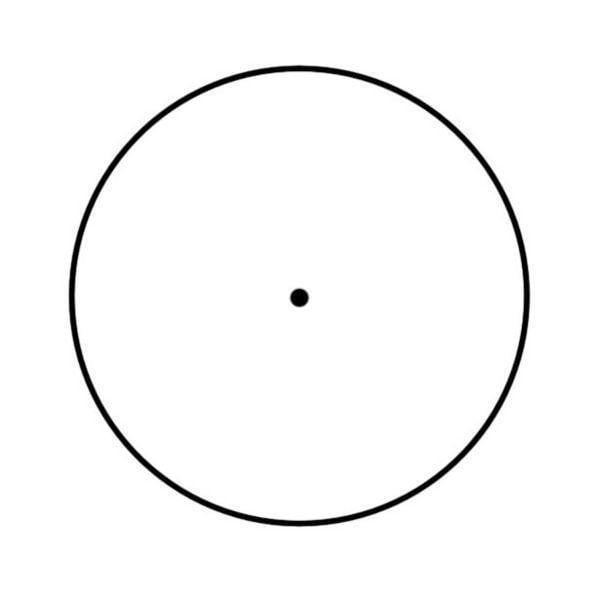
It is important to understand that this is not a description of an ordinary physical event. Space, time, and matter belong to the created order. The Lurianic imagery of a spherical cavity surrounded by infinite light should not be mistaken for a literal geometric account of an event occurring in preexisting physical space. At this point on the ontological order of creation, space and time are not created yet, and any spatial references should be understood as metaphors or, more formally, as referring to a conceptual space.
Chassidic philosophy, especially the teachings of Chabad, insists that tzimtzum is not literal (lo kipshuto). G-d does not withdraw from any place. There is no place were G-d is not. What is concealed is the revelation of His infinite light from the perspective of created beings.
In the familiar opening account of Etz Chaim, Rabbi Chaim Vital describes the withdrawal of the infinite light and the subsequent extension of a narrow ray, the kav, into the vacated space. The reshimu becomes explicit in other Lurianic formulations and receives extensive treatment in later Kabbalistic and Chassidic writings.[1]
Reshimu is one of the more mysterious concepts of Lurianic Kabbalah, which is hard to define. Reshimu is practically synonymous with chalal; it clarifies what chalal is. It is not light, and it is not total absence of light—it is an impression light leaves behind after it is withdrawn. The best analogy I can offer is this. Imagine you come to a party and find the place buzzing with excitement—everyone is talking about a famous person, a celebrity who made a cameo appearance at the party and left. The person is no longer there, but the impression she left is pulpable. You came late and did not get the chance to see the person, but the excitement robs off on you—you will almost as if you had seen, shook hands, and chatted with that celebrity—something to brag home about. Reshimy—the impression left by the withdrawn light—is what indexes the chalal, as it were, thereby creating a conceptual space.
The Tzemach Tzedek, Rabbi Menachem Mendel Schneersohn, the third Rebbe of Chabad, offers a particularly suggestive analogy. Imagine someone writing on a surface and then erasing the writing. Although the writing itself has disappeared, a faint impression remains.
That impression is the reshimu.
In Derech Mitzvotecha, the Tzemach Tzedek explains that the vessels derive from the reshimu, whereas the lights that become clothed within them derive from the kav.[2] This distinction deserves our attention.
The reshimu supplies the principle of limitation, differentiation, and receptivity. The kav supplies the illuminating flow that enters the realm of finite existence. Through their relationship, light can be received within defined forms. The universe requires both. Without the restriction represented by the reshimu, the light would remain undifferentiated. Without the illumination of the kav, the capacity for finite form would not become a revealed, structured world.
We might say that the reshimu makes differentiation possible, while the kav makes that possibility manifest. But what kind of imprint can accomplish such a thing?
3. The Architect’s Blueprint
An extraordinary analogy appears in the teachings of Rabbi Shneur Zalman of Liadi, the Alter Rebbe, founder of Chabad Chassidism.
In a discourse from 1806–1807, the Alter Rebbe compares the reshimu to an architectural drawing: a vast building is represented by extremely fine lines on a comparatively small sheet.
The drawing occupies only two dimensions, yet it depicts the structure of a building that will occupy three. The dimensions and relationships of the future building are represented in the plan without the building itself being present.
A similar architectural analogy appears in the teachings of the Maggid of Mezeritch, the Alter Rebbe’s teacher.[3]
Of course, the Alter Rebbe was not discussing information theory or holography. His purpose was theological: to explain how the Divine capacity for limitation can express something of the unlimited Divine essence. Nevertheless, the analogy is remarkably suggestive from a modern perspective.
A small, seemingly insignificant arrangement of lines can represent a far larger and more complex structure. What matters is not the material quantity of the ink but the relationships encoded in its configuration. The blueprint does not contain bricks, beams, or rooms. Yet someone who understands the drawing can use it to construct a building.
The information necessary to describe a complex spatial structure need not itself occupy that structure. This is the point at which the metaphor of the reshimu begins to resemble a hologram.
4. A Hologram Waiting for Light

Holography was invented by Dennis Gabor in 1948, a discovery for which he received the Nobel Prize in Physics in 1971. Its development into a practical optical technique became possible with the invention of the laser.[4]

An ordinary photograph records the intensity of light reflected from an object. It captures a two-dimensional distribution of brightness, but ordinarily does not preserve the phase relationships of the incoming light waves.
A hologram does something more sophisticated.
A coherent beam of light is divided into two parts. One beam illuminates an object, and the light scattered by that object reaches a photographic plate. The second beam, called the reference beam, reaches the plate directly.
When these two waves overlap, they interfere. The resulting pattern of bright and dark fringes records information about their relative phases as well as their amplitudes.
Develop the plate and look at it under ordinary light. You will not see a recognizable picture of the object. You will see an apparently meaningless pattern of exceedingly fine lines and fringes.
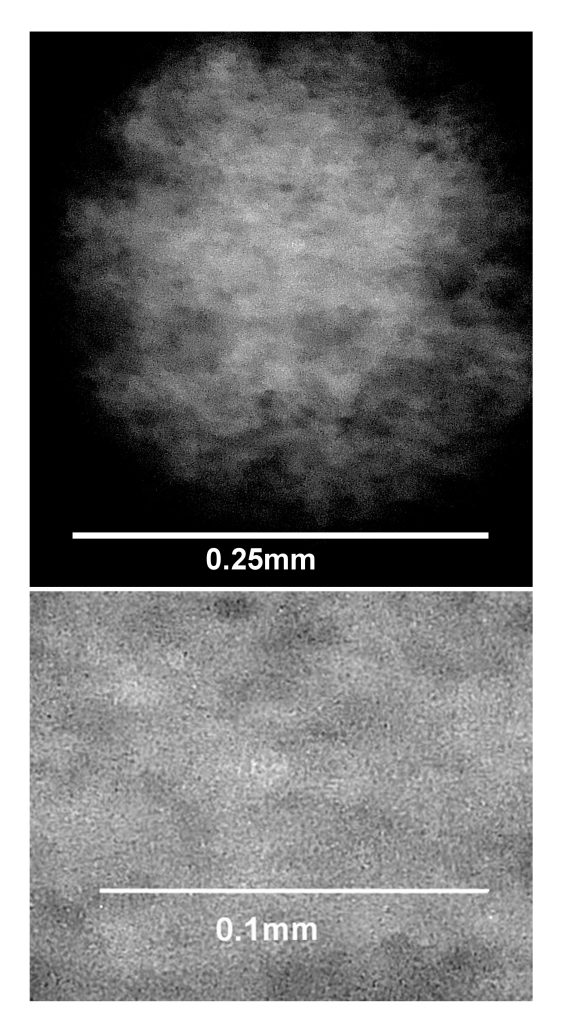
The object has disappeared from the recording apparatus. What remains is an optical trace.
Now illuminate the developed hologram with an appropriate reconstruction beam, corresponding to the original reference beam. Something remarkable happens. The incoming light is diffracted by the recorded interference pattern in such a way that the original optical wavefront is reconstructed. Looking through the hologram, an observer can see a three-dimensional image, with depth and parallax, as though the original object were still present.
The hologram has not created the physical object. It has reconstructed the light field that would have reached the observer from that object. This distinction is important.
Still, consider the essential sequence. First, light leaves an imprint. Second, the original light field is no longer present. Third, another beam illuminates the imprint. Finally, the interaction of the beam with the recorded pattern produces a structured optical image.

Does this not bear a striking resemblance to the Kabbalistic account of tzimtzum, reshimu, and kav?
Light of the Infinite leaves imprint ⟷ Coherent light leaves an imprint.
The original Light of the Infinite is no longer present in the vacated space ⟷ The original light field is no longer present.
A beam of the Light of the Infinite (kav)—illuminates the vacated space and interacts with the reshimu, creating finite vessels ⟷ Another beam of coherent light illuminates the plate and interacts with imprint, restoring the three-dimensional image.
The infinite light is concealed, leaving the reshimu. The kav then enters the vacated space. Through the relationship of the illuminating ray with the residual imprint, differentiated structures—the kelim—become possible.
The resemblance is especially compelling because, in both accounts, the trace and the illuminating beam have complementary functions. The trace provides a structure capable of shaping the illumination; the beam supplies the light through which that structure becomes manifest.
A hologram without its reconstruction beam is a latent optical record. The illuminating beam without the hologram does not reproduce the recorded image. It is their interaction that matters.
There is, however, one important difference. An optical hologram records the wavefront of an object that already existed. The reshimu does not record a previously existing physical universe. In the Lurianic account, the finite worlds have yet to emerge. The trace is associated with the Divine capacity for limitation, not with an earlier physical scene awaiting reconstruction.
The metaphor concerns the relationship between an imprint, illumination, and manifested structure—not an identical sequence of physical events.
And holography has another, even more surprising dimension.
5. The Universe on Its Boundary
In 1973, Jacob Bekenstein (whom I had a pleasure of meeting, when we shared a kosher lunch at a physics conference, where we were the only two people wearing kipa) proposed that a black hole possesses entropy proportional to the area of its event horizon.[6] Stephen Hawking (whom I also met), who first didn’t understand and criticized Bekenstein’s discovery, soon realized its importance and quickly jumped on the bandwagon. His subsequent calculation of black-hole radiation established the coefficient in the celebrated Bekenstein–Hawking entropy formula.[7]
In natural units, where the relevant fundamental constants are set to unity, the relationship takes the deceptively simple form:
S = A/4
Here S is the black hole’s entropy and A is the area of its horizon measured in Planck units.
The remarkable feature is the dependence on area rather than volume. In ordinary thermodynamics, the number of microscopic degrees of freedom available to a system generally grows with its volume. A black hole behaves differently. Its entropy scales with the area of the surface that bounds it.
Gerard ‘t Hooft and Leonard Susskind recognized the broader implications of this result in the 1990s. They proposed that a theory of quantum gravity might admit a description in which the information associated with a spatial region is represented by degrees of freedom on a lower-dimensional boundary, as in hologram, which encodes the information about a three-dimensional object on a two-dimensional surface. The idea became known as the holographic principle.[8]
The name deliberately evokes an optical hologram: a lower-dimensional record can describe something that appears to occupy a higher-dimensional space.
But the analogy is not merely visual.
In 1997, Juan Maldacena proposed a remarkable correspondence between certain theories of gravity in anti-de Sitter spacetime and conformal quantum field theories defined on their boundaries.
This correspondence, known as AdS/CFT, provides a concrete realization of holography. A gravitational theory in a higher-dimensional spacetime can have an equivalent description in terms of a quantum theory with one fewer spatial dimension.[9] The two descriptions have very different appearances, yet encode the same physical content.
Subsequent developments have made the relationship even more intriguing. Shinsei Ryu and Tadashi Takayanagi showed how entanglement entropy in the boundary theory can be related to the area of a geometric surface in the gravitational bulk. Mark Van Raamsdonk and others developed the suggestion that spacetime connectivity itself is intimately related to patterns of quantum entanglement.[10]
In these theories, geometry is not necessarily an independent ingredient added to information. Under suitable conditions, the geometric description can emerge from the organization of quantum degrees of freedom.
Pause for a moment to consider what this means.
We ordinarily assume that space comes first and that physical objects and information are subsequently placed within it. Holographic duality challenges the necessity of that order. A theory formulated without the bulk in which information encoded in a lower spatial dimension—a surface—can nevertheless describe a gravitational world in three dimension. The apparent volume is not necessarily the most fundamental description of its own contents.
This brings us back to the reshimu.
The Kabbalistic account proposes that differentiated existence arises through an interaction between an imprint associated with limitation and a measured revelation of light. Modern holographic physics provides an independent example of how spatial structure can be related to information in a description that does not itself possess the same spatial dimensionality.
In the Lurianic account, the possibility of a structured world is not exhausted by the light that will illuminate it. There is also a prior principle of limitation and form.
In holographic physics, the structure of a spatial world can be represented through a description whose degrees of freedom are organized quite differently from those of the apparent volume.
The shared idea is that the structure manifested within a world may depend on something more fundamental than the immediately visible contents of that world.
I find the parallel fascinating.
6. Why Creation Needs Both Light and Limitation
The conventional image of creation is simple enough: there is darkness, G-d introduces light, and the world appears.
The Lurianic picture is much subtler. Unlimited revelation does not, by itself, produce a finite world. On the contrary, according to the logic of tzimtzum, unbounded illumination precludes the appearance of separate, limited existence. For a world to emerge, there must first be the possibility of boundaries. This is the significance of the reshimu.
The reshimu represents the capacity for limitation that remains—or, more precisely, becomes manifest through concealment—after the withdrawal of infinite revelation. The kav brings measured illumination into the realm where such limitation is possible. The kelim give that revelation differentiated form.
The resulting world is neither pure light nor pure concealment. It depends upon their relationship.
Here the optical hologram offers a useful insight. The holographic pattern, considered by itself, reveals almost nothing to an ordinary observer. It seems to be a collection of meaningless dots and fringes. Yet its structure determines how an incoming beam will be diffracted, and therefore what optical image will appear. The apparent disorder contains a hidden order.
Similarly, the reshimu is associated with concealment, but that concealment is not devoid of significance. It introduces the capacity for differentiation through which revelation can assume finite form.
The Alter Rebbe’s architectural analogy makes the same point in a different way. A blueprint does not contain a house. It contains an intelligible arrangement of relationships from which a house can be constructed.
This is why I find the comparison with holography more illuminating than simply saying that the universe is a hologram. The latter statement is fashionable, but it often explains very little. A hologram of what? Recorded where? Reconstructed by what?
The Kabbalistic account suggests a different set of questions.
What makes a finite structure possible? What is the relationship between the information that defines its form and the illumination that makes it manifest? How can something apparently concealed become the foundation of revelation?
These are not identical to the technical questions of quantum gravity. Yet the two disciplines approach, from very different directions, the problem of how a richly structured reality can arise from a description that does not resemble that reality.
In Kabbalah, the reshimu is not merely a relic of a vanished light. It carries the possibility of form.
And the kav is not simply a beam of light that reveals like a flashlight objects already waiting in darkness. In the theological account, measured revelation participates in bringing those structures into being.
This is an essential difference from ordinary optical reconstruction—and perhaps the most philosophically interesting feature of the comparison.
7. The Light That Leaves a Trace
We can now return to the original puzzle.
Why does the infinite light leave an imprint –reshimu—after the tzimtzum?
In the Chassidic interpretation, the answer is that limitation itself expresses a dimension of Divine omnipotence. The Infinite is not confined to infinite revelation. Divine power encompasses the capacity to make finite existence possible. Unlimited G-d has the capacity for infinitude as for finitude.
The reshimu therefore cannot be understood merely as an accidental remnant of something that has disappeared. It belongs to the very logic of creation. It is the imprint of a concealment that makes revelation possible.
An optical hologram gives us a remarkable physical metaphor for this relationship. Light leaves a trace; the trace survives the departure of the original light field; another beam illuminates it; and the interaction produces an organized optical image whose apparent dimensionality exceeds that of the recording surface.
The holographic principle in quantum gravity takes the informational aspect a step further, suggesting that the structure of spacetime itself can admit a description in terms of degrees of freedom organized without the full bulk geometry.
Neither theory proves the Lurianic account. Nor should we expect it to. Kabbalah describes the metaphysical relationship between Divine revelation, concealment, and created existence; physics investigates the mathematical laws governing the world that exists.
Yet, I find it remarkable that modern physics has developed two distinct concepts in which an apparently impoverished description can give rise to a richly structured appearance.
Perhaps the most profound lesson of the reshimu is that concealment and creation are inseparable. The withdrawal of infinite light is not simply a subtraction. It makes possible a new kind of revelation: one that can be measured, differentiated, and received within finite vessels.
And the ray of light that enters the void does not encounter nothing. It encounters the reshimu.
The world can then begin to take form.
[1] Rabbi Chaim Vital, Etz Chaim, Shaar 1, Anaf 2, on tzimtzum and the kav. For the textual development of the reshimu motif in later Lurianic writings, particularly those associated with Rabbi Moshe Zacuto and Rabbi Naftali Tzvi Bacharach, see Eli Rubin, “Absent Presence: The Revelatory Trace (Reshimu) of Divine Withdrawal.”
[2] Rabbi Menachem Mendel Schneersohn (Tzemach Tzedek), Derech Mitzvotecha, Mitzvas Haamanas Elokus, section 6, translated by Eliyahu Touger. See “Mitzvas Haamanas Elokus: Section 6.” On the complementary functions of reshimu and kav, see also Eli Rubin, “Covert Luminosity.”
[3] Rabbi Shneur Zalman of Liadi, Maamarei Admor HaZaken 5567, p. 25, on the architectural blueprint analogy; compare Rabbi DovBer, the Maggid of Mezeritch, Maggid Devarav le-Yaakov, section 11. Both are discussed and cited in Rubin, “Absent Presence.”
[4] Dennis Gabor, “Holography, 1948–1971,” Nobel Lecture, December 11, 1971. For an introductory technical explanation of holographic recording and reconstruction, see IEEE Technology Navigator, “Holography”.
[5] Symbol ⟷ denotes a structural or conceptual correspondence rather than identity or logical equivalence.
[6] Jacob D. Bekenstein, “Black Holes and Entropy,” Physical Review D 7 (1973): 2333–2346.
[7]Stephen W. Hawking, “Particle Creation by Black Holes,” Communications in Mathematical Physics 43 (1975): 199–220.
[8] Gerard ‘t Hooft, “Dimensional Reduction in Quantum Gravity,” arXiv:gr-qc/9310026; Leonard Susskind, “The World as a Hologram,” Journal of Mathematical Physics 36 (1995): 6377–6396; Juan Maldacena, “The Large N Limit of Superconformal Field Theories and Supergravity,” Advances in Theoretical and Mathematical Physics 2 (1998): 231–252. For a comprehensive review, see Raphael Bousso, “The Holographic Principle,” Reviews of Modern Physics 74 (2002): 825–874.
[9] This is a very interesting result, which doesn’t solve the quantum gravity enigma because we do not live in anti-de Sitter spacetime.
[10] Shinsei Ryu and Tadashi Takayanagi, “Holographic Derivation of Entanglement Entropy from the Anti-de Sitter Space/Conformal Field Theory Correspondence,” Physical Review Letters 96 (2006): 181602; Mark Van Raamsdonk, “Building Up Spacetime with Quantum Entanglement,” General Relativity and Gravitation 42 (2010): 2323–2329.


