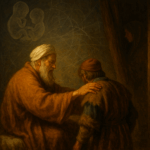
Isaac and Rebecca: Deception or Wigner’s Friend Paradox?
Synopsis The narrative of the “stolen blessings” in Parashat Toldot presents a profound moral paradox: How could Rebecca, a righteous prophetess, and Jacob, the archetype
Synopsis The narrative of the “stolen blessings” in Parashat Toldot presents a profound moral paradox: How could Rebecca, a righteous prophetess, and Jacob, the archetype
Stars, Sand… and Silence Abraham’s blessings sparkle with cosmic imagery—stars above, dust below. But when God blesses Isaac, the patriarch of gevurah, something extraordinary happens:
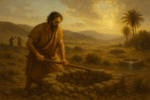
The third aliyah of Parshat Toldot presents a profound metaphor through Isaac’s well-digging enterprise. Isaac re-opens his father’s wells, stopped up by the Philistines; then
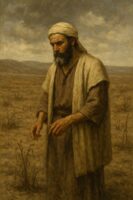
Dwell in this land. (Genesis 26:3). In famine, with every natural instinct pointing south toward Egypt, Isaac (Yitzḥak) is told to stay. The Midrash notes
Structurally identical biblical accounts of creation, destruction, and restoration are viewed as a manifestation of dialectic triad thesis-antithesis-synthesis.
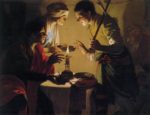
And these are the chronicles of Isaac… (Genesis 25:19) So Esau went unto Ishmael, and took unto the wives that he had Mahalath the daughter
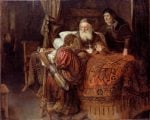
And Rebekah spoke unto Jacob, her son, saying: “Behold, I heard thy father speak unto Esau thy brother, saying: Bring me venison, and make me
Do you like riddles? Here is a riddle – what do these two figures represent in the context of Exodus? No Idea? How about
There is a continuous thread about the mastery of time that weaves through the last chapters of the book of Genesis (Bereshit) and continues through

The story of entangled twins is continuing in the Torah portion Vayeitzei (Genesis 28:10–32:3.) Structurally, it is very similar to the story in the previous Torah