
TL;DR: Ha’azinu’s warning about a “no-people” (b’lo-am) finds chilling relevance in the modern “Palestinian” identity—a political construct created in 1964 by the KGB and Arab League, not an ancient nation. The same prophetic verses that foretold harassment by this manufactured opposition also predicted the “flying demons” (drones) and hamas (violence from tunnels) of October 7th. The remedy: abandon alien ideologies and return to Torah values.
Summary: This essay explores how Moses”s final song, Ha’azinu, prophetically describes Israel’s modern predicament. The Torah’s reference to a “no-people” (b’lo-am) who would provoke Israel corresponds to the politically manufactured “Palestinian” identity—a term that historically referred to Jews until 1964, when the Soviet KGB and Arab League created the PLO and invented Palestinian nationhood as a Cold War weapon against Israel. Through declassified documents, defector testimonies, and candid admissions from PLO leaders themselves, the essay traces how this “non-nation” was constructed for tactical purposes. The prophetic warning extends to specific details: the “flying demons” (reshef) manifest as Hamas drones on October 7th, while the word hamas itself appears in verses describing underground threats—a precise description of tunnel-dwelling terrorists. The path forward requires abandoning the “non-gods” (alien ideologies) that invited this harassment by a non-people.
Parashah Ha’azinu
This Shabbat, in synagogues around the world, we read Ha’azinu, Moses’s song that compresses Jewish history into a few burning stanzas. One verse struck me anew:
And He said: “I will hide My face from them, I will see what their end shall be; for they are a very perverse generation, children in whom is no faithfulness. They have roused Me to jealousy with a no-god; they have provoked Me with their vanities; and I will rouse them to jealousy with a no-people; I will provoke them with a vile nation. (Deuteronomy 32:21)
Rashi understands the word b’lo-am (“no-people”), to imply a disreputable nation, a people lacking stature. He brings a specific example from the Talmud (Yevamot 63a) and the Sifrei, identifying them as barbarians. Targum Onkelos renders these words as “with a people that is not a people.” Ramban translates these words as “A Newly Arrived Nation.”
I know of no clearer modern analogue to this non-people than the political identity marketed in our time as “Palestinian,” an identity that took shape not as a long-standing nation but as a modern political project designed in large part in opposition to Jewish sovereignty. The history matters.
The Origins of “Palestinian” (as a term and as a project)
After Rome crushed the Bar Kokhba revolt (132–135 CE), Emperor Hadrian renamed Judea as Syria Palaestina and Jerusalem as Aelia Capitolina—a deliberate imperial move aimed at erasing Jewish national identity in its homeland.[1] The name derives from the Philistines (Hebrew: Plishtim), a people mentioned in the Hebrew Bible. The Philistines, a non-Semitic Aegean people (often identified with the “Sea Peoples”), settled on the southern coastal plain of Canaan around the 12th century BCE. By Hadrian’s time, the Philistines had been assimilated into the broader population for centuries and no longer existed as a distinct people. By resurrecting the name Palaestina, Hadrian sought to erase all memories of a Jewish presence there.[2] Yet the renaming did not end Jewish presence or creativity in the land: the Mishnah was compiled in the Galilee around 200 CE under Rabbi Judah ha-Nasi, and centuries later the Jerusalem Talmud was redacted in Tiberias and Caesarea. There has been a continuous, though diminished, Jewish presence in the Holy Land. The land was also inhabited by Samaritans, Greco-Syrians, and Bedouins.[3]
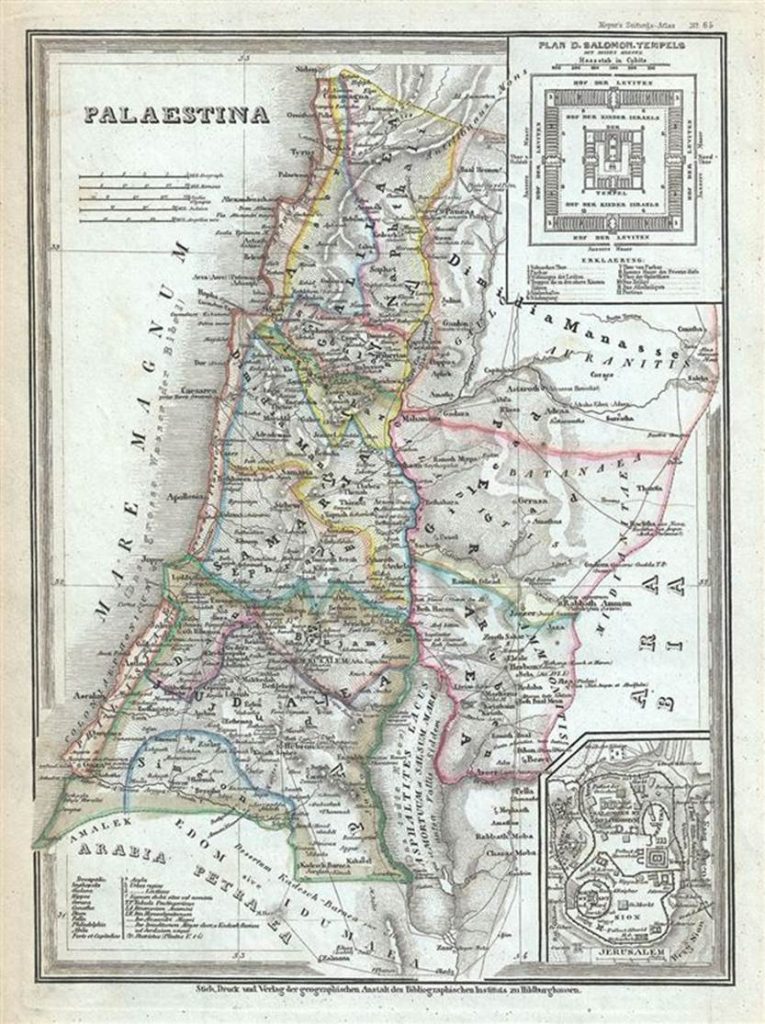
While Arab and Muslim populations had been present in the Ottoman Empire for several centuries, Jewish immigration in the late 19th century generated economic activity that drew Arab migration from neighboring Arab countries.
Fast-forward to the British Mandate (1917–1948): the word Palestinian commonly referred to Jews living in the land. The Zionist daily, founded in 1932, was The Palestine Post (renamed The Jerusalem Post in 1950); the Anglo-Palestine Bank later became Bank Leumi; and the Palestine Symphony Orchestra, established in 1936, became the Israel Philharmonic. All three reflect how “Palestinian” in that era predominantly labeled Jewish institutions and people.
The modern Arab-Palestinian national project emerged in the mid-20th century, particularly after 1967, and was shaped by regional statecraft and Cold War intrigues. The Palestine Liberation Organization (PLO) was established in Cairo in 1964 under Arab League auspices—before Israel controlled Judea–Samaria (the “West Bank”) or Gaza—reflecting regional politics more than an established, independent national tradition.[4] During 1948–1967, Jordan annexed the West Bank (recognized by only a handful of countries), and Egypt administered Gaza without creating any sovereign “Palestine.”
Fatah was founded as a political and military organization in 1959, in Kuwait, by members of the Arab diaspora who had left Israel after the 1948 War. Its principal founders included Yasser Arafat and aides such as Khalil al-Wazir and Salah Khalaf, who were primarily professionals and students residing in the Gulf states and other Arab countries. Fatah was a nationalist political and guerrilla movement. It never claimed to represent the “Palestinian People.”
The Palestine Liberation Organization (PLO) was established later, in 1964, at an Arab League summit in Cairo, Egypt. It was created by the Arab League, under the significant influence of Egyptian President Gamal Abdel Nasser, to serve as an official umbrella organization representing the Arab population who lived in Palestine before 1948 or continued to live in Israel after 1948, with Ahmad Shuqayri appointed as its first chairman. Fatah, originally an independent guerrilla movement, would later join and become the dominant faction within the PLO in 1969, with Yasser Arafat assuming the role of its chairman.
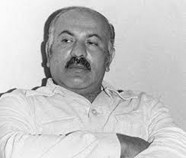
A striking admission came from Zuheir Mohsen, a PLO faction leader aligned with Syria, who told the Dutch daily Trouw on March 31, 1977, that Palestinian identity was emphasized for tactical reasons in a broader Arab struggle—a candid window into how modern “Palestinian” nationhood has often been deployed tactically as a geopolitical tool. Here is what Zuheir Mohsen said in his own words:
The Palestinian people do not exist. The creation of a Palestinian state is only a means for continuing our struggle against the state of Israel for our Arab unity… Only for political and tactical reasons do we speak today about the existence of a Palestinian people, since Arab national interests demand that we posit the existence of a distinct “Palestinian people” to oppose Zionism. Yes, the existence of a separate Palestinian identity exists only for tactical reasons.[5]
Moreover, the founder of the PLO, Yasir Arafat himself, an Arab of Egyptian descent, admitted without hesitation:
The Palestinian people have no national identity. I, Yasir Arafat, man of destiny, will give them that identity through conflict with Israel.[6]

KGB Conspiracy
General Ion Mihai Pacepa, chief of Romania’s foreign intelligence service, played a significant role in Soviet bloc operations directed against Israel and the US. In 1978, he became the highest-ranking intelligence officer ever to defect from the Soviet sphere and, among many secret revelations, provided details of KGB operations against Israel. Pacepa says the chairman of the KGB, Yuri Andropov (later Leonid Brezhnev’s successor as General Secretary of the Soviet Communist Party), told him:
We needed to instill a Nazi-style hatred for the Jews throughout the Islamic world, and to turn this weapon of the emotions into a terrorist bloodbath against Israel and its main supporter, the United States.[7]
The KGB created the Palestine Liberation Organization (PLO) in 1964, when the Palestinian National Charter was drafted in Moscow—the document that invented Palestinian nationhood. During the League of Nations and later United Nations Mandate for Palestine 1919-1948, “Palestinians” had been commonly used to describe Jews living in the territory. “Palestinian people” to mean Arabs in Palestine appeared for the first time in the 1964 charter, written by the KGB.
According to the CIA, “Since the October 1973 war, the Soviets have made recurrent use of the Palestinian issue to try to obstruct US-sponsored partial steps toward a Middle East settlement.” Soviet support for the Palestinians was intended inter alia to “Pressure Egypt away from the US and back towards the USSR.” The CIA report further quotes Soviet Ambassador Azimov to say: “The PLO is Our Game and the PDFLP[8] Our Player.”[9]
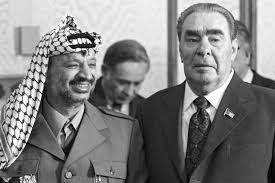
After Arafat, another KGB agent took his place. As reported by CNN, once-secret Soviet documents claim Palestinian President Mahmoud Abbas was once a KGB agent codenamed “Mole.” The documents, obtained by CNN from the Mitrokhin Archive at Churchill College at the University of Cambridge, say that Abbas, who completed graduate work in Moscow in 1982, was a KGB agent while he was a member of the Palestine Liberation Organization in Damascus. One of the files in the Mitrokhin Archive, labeled “Envelope K-24” relates to the “Near and Middle East.” Paragraph 244 of the section refers to Mahmoud Abbas. “‘Mole’ – Abbas Mahmoud 1935. Native Palestinian. Executive Committee FATAH, PLO in Damascus. KGB Agent.”[10] Abbas’s own doctoral dissertation, which he defended in 1982 at the Patrice Lumumba University in Moscow and published in 1984 as The Other Side: The Secret Relationship Between Nazism and Zionism, advanced Holocaust-revisionist themes.
As the Torah predicted, we will be harassed by a non-nation, the so-called Palestinians. This is a manufactured nation that did not exist prior to 1964. Their raison d’être is to oppose Israel’s existence and to harass the Jewish people. This is the result—measure for measure—of serving non-gods, that is, ideologies alien to the Torah.
Hamas
Ha’azinu’s next verses intensify the warning:
They will sprout hair from famine, attacked by demons, excised by Meriri. I will incite the teeth of livestock upon them, with the venom of creatures that slither in the dust. (Deuteronomy 32:24)
The Hebrew word רֶשֶׁף (reshef) is translated above simply as “demons.” However, explaining this word, Rashi quotes Job 5:7, where “bnei reshef” means “flying creatures.” Accordingly, in some editions of the Torah, this word is translated as “flying dragons” (or “flying demons”). We now know what these “flying demons” are—drones that Hamas terrorists used on October 7, 2023, to overwhelm and disable the cameras and security systems along the wall separating Gaza from Israel.
And if that is not convincing enough, the word “hamas” (which means “venom,” “violence,” or “brutality”) appears verbatim in the verse, speaking of the venom of creatures that slither in the dust. Why “in the dust”? Because they live in underground tunnels! The Torah warned us about these tragic events three and a half thousand years ago. And rabbis, sensing the urgency of the message, said that everyone should try to memorize the Torah portion of Ha’azinu. These words of Torah were echoing in my mind as the Torah scroll was being read in our synagogue on Shabbat. Their message, loud and clear, leaves no doubt—we must turn away from worshiping non-gods, the alien ideologies, and return to Torah values. When there are no more non-gods among the Jewish people, we will no longer be harassed by the non-people.
Conclusion
The prophecy of Ha’azinu speaks directly to our moment. What the Western world believed for decades as a genuine national movement reveals itself, through declassified documents and the candid admissions of its own architects, as something else entirely: a Cold War fabrication designed to delegitimize Jewish sovereignty and serve Soviet geopolitical interests. The “no-people” predicted in Deuteronomy 32:21 emerged not from ancient roots but from KGB offices in Moscow and Arab League conferences in Cairo.
Yet the Torah’s warning extends beyond historical curiosity. The same prophetic verses that identified this manufactured opposition also foresaw the precise nature of contemporary threats—from the “flying demons” that disabled Israeli defenses to the Hamas (violence) emerging from underground tunnels. The specificity is uncanny; the implications, sobering.
The remedy, too, is clear. Ha’azinu does not counsel despair but transformation. The harassment by a “no-people” results from our own spiritual displacement—the worship of “no-gods,” the embrace of ideologies alien to Torah values. When we abandon these foreign constructs and return to our authentic spiritual heritage, the no-people lose their power to provoke us.
Three and a half millennia ago, Moses compressed all of Jewish history into this song. Seated in synagogue as the Torah scroll was read, I heard these ancient words speak with urgent clarity to our present crisis. The prophetic warning has manifested with disturbing precision. The question now is whether we will heed the prophetic solution with equal seriousness.
Endnotes:
[1] The Cambridge Ancient History notes that after the revolt, “Judaea was now renamed Syria Palaestina.”
[2] Historian Moshe Sharon states the name change was a direct consequence of the revolt, aimed at severing the connection between the Jewish people and the land.
[3] Historian Shlomo Sand’s work, among others, details the continuity of Jewish life in Galilee. Demographic studies of Roman and Byzantine Palestine show a mixed population, with Jews remaining a significant, and at times majority, group in Galilee for centuries.
[5] Richard Kemp, The Jewish Policy Center, Exposing the Soviet Lie of Apartheid. 2022, https://www.jewishpolicycenter.org/2022/04/08/exposing-the-soviet-lie-of-israeli-apartheid/, retrieved 10/04/2025.
[6] Alan Hart, Arafat: A Political Biography, 1984.
[7] Ion Mihai Pacepa “Russian Footprints,” National Review, August 24, 2006, https://www.nationalreview.com/2006/08/russian-footprints-ion-mihai-pacepa/, retrieved on 10/05/2025.
[8] Popular Democratic Front for the Liberation of Palestine (DFLP) is a Marxist-Leninist left-wing faction of the PLO controlled in the Soviet period by Moscow.
[9] Research Study, “The Soviet-Palestinian Connection Since the October 1973 War,” Central Intelligence Agency, Directorate of Intelligence, Office of Political Research, April 1975. (Formerly a Top Secret report that has been declassified.)
[10] By Oren Liebermann, CNN, September 8, 2016, https://www.cnn.com/2016/09/08/world/soviet-papers-palestinian-president-was-a-kgb-agent, retrieved on 10/04/2025.


Danke für die eindrucksvolle Darstellung der Situation.