Quanta of Thought | Parashat Noach
And the whole earth was of one language and one speech. (Genesis 11:1)
The story of the Tower of Babel seems, at first glance, like a triumph of human unity. All spoke one language, shared one vision, and worked together toward a common goal. Yet, paradoxically, God saw this as dangerous. Why?
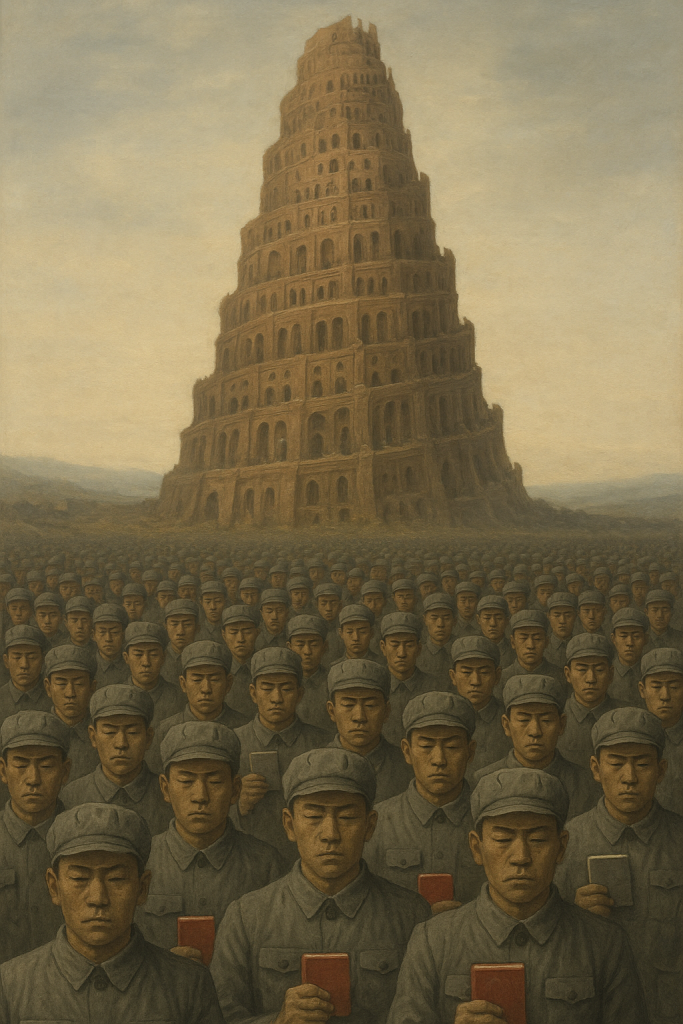
The Zohar explains that their unity was not for the sake of Heaven. They sought to build a tower to make a name for themselves—to dominate heaven, not to serve it. It was a unity of conformity, not harmony, a unity that suppresses individuality rather than sanctifying it.
This is what I saw growing up in the Former Soviet Union. The communist ideology suppressed not only the freedom of speech but the freedom of thought itself. To me, the story of the Tower of Babel is the first attempt in history to build a utopian society based on enforced unity. The unity sounds seductively fair. However, history proved that after the words Liberté, Égalité, Fraternité, guillotines always follow.
In physics, we find a similar paradox. When all particles are forced into the same quantum state, as in a Bose–Einstein condensate, individuality is lost. The system becomes uniform, motionless—a frozen field of sameness. Diversity of states, paradoxically, is what allows complexity, creativity, and life itself to emerge.
The Tower of Babel teaches us that true unity is not sameness but symphony. Each voice, each soul, must express its unique wavelength, its own frequency within the divine orchestra. Only when individuality harmonizes—not dissolves—within the collective does divine creation flourish.
Takeaway:
Let your voice add its unique note to the world’s song. Unity does not mean building one tower; it means building together—each from our own place, all reaching upward toward the same heaven.


